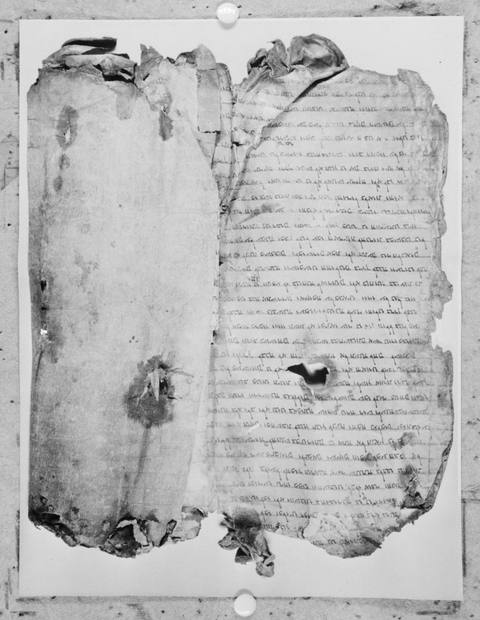
The full text of Ezekiel 1 with the translators' notes: the date (end of July 593 BC), the river Chebar as probably a canal near Nippur, the creatures as cherubim, and the vision as a theophany.
“Such was the appearance of the likeness of the glory of the LORD.” source
Page copyright 2019–2026; no date for the translation is shown on the page.
OFFICIALPittsburg State University, Leonard H. Axe Library, Irene P. Ertman Collection · 1974
Library record for Josef F. Blumrich's book: Bantam Books, 1974, 179 pages, illustrated. The publisher's blurb presents the author as chief of NASA's systems layout branch and the book as Bible-based evidence for ancient technology and visitors.
University library catalogue record of the 1974 Bantam paperback; the blurb is the publisher's, not the library's.
CLASSIFIEDDeclassifiedFILE NO. 027SHEET 2 OF 2
Analysis
Our own reading of the file, written from the sources on the other sheets. Opinion is marked as such.
What is checkable: the text exists, it is old, and it is dated within itself. The US bishops' translation dates the vision to the fifth year of King Jehoiachin's exile, which its notes put at the end of July 593 BC, and places the river Chebar as probably a canal near Nippur. It is a written account by one person, which is why the evidence strength here is 1.
What the text means is a matter of reading. For believers it is a vision of God, the root of Merkavah lore and read in synagogues on Shavuot. For scholars it is a theophany: the living creatures are cherubim drawn on Assyrian guardian figures, and the description's repetitions show how hard the divine is to put into words. For Blumrich it was an engineering description of a craft.
Our label covers only the spacecraft claim, and it is Speculation: a theory with no scholarly or official backing. Critics point out that every element of the vision has a known source in the imagery of Ezekiel's own world, and that the machine has to be read into the text. Whether the vision came from God is not a claim this archive labels.
What it shows
That Ezekiel 1 describes four living creatures, wheels ‘as though one wheel was inside the other’ and a throne above them, ending with ‘the likeness of the glory of the LORD’.
That Jewish tradition has treated the passage as sacred lore, the Merkabah, since at least the time of Ben Sira, according to the Jewish Encyclopedia.
That a NASA engineer, Josef Blumrich, published a book in 1974 arguing the passage described spacecraft.
What it doesn't prove
That Ezekiel saw a machine. No physical trace, second witness or independent record of the event exists; there is only the text.
That Blumrich's NASA background makes his reading scholarly. Biblical scholars have not taken it seriously.
Anything about the faith claim. Whether the vision came from God is a matter of belief, which this archive does not label true or false.
The other side
The case for the spacecraft reading rests on the text's unusually concrete detail: wheels beside each creature, rims, movement in any of four directions without turning, a firmament above their heads. Josef Blumrich, a NASA rocket engineer who had worked on the Saturn V, the lunar lander and Skylab, took that detail at face value and concluded it described a real craft. Our label does not say this is impossible; it says no scholarly or official body supports it.
A real vision of a spiritual reality, told in physical images. In Jewish tradition the chapter is the haftarah for the first day of Shavuot and a primary source of Kabbalah. [chabad-dubov]
A theophany. The living creatures are cherubim, modelled on Assyrian guardian figures with animal bodies, eagle wings and human heads. [usccb-ezekiel]
Temple and Near Eastern imagery: four-winged beings like the god Ninurta on Assyrian reliefs, wings touching like the cherubim in Solomon's temple. Angels, not aliens. [callahan-2005]
The wheels
Part of God's throne-chariot, the Merkabah: by Ben Sira's time already a sacred mystery in Jewish lore. [jewish-enc-merkabah]
The repetitions and inconsistencies in the description convey how hard it is to describe the divine in human language. [usccb-ezekiel]
More metaphor than mechanics. ‘A wheel within a wheel’ fits old solid wheels with large hubs, still used on temple stands. [callahan-2005]
The spacecraft theory
Ancient-astronaut readers follow Blumrich: the vision describes a landing craft from a mothership, worked out by an engineer. [wiggins-2015]
Never taken seriously by biblical scholars; the handling of the biblical passages is called awkward and selective. [wiggins-2015]
Blumrich, unaware that Ezekiel described God enthroned, reinterpreted the description as a UFO. [callahan-2005]
Open questions
What is the ‘thirtieth year’ in verse 1? The translators' note says it has never been satisfactorily explained.
Why did a vision so tied to Babylonian and temple imagery become, in the 1970s, a favourite text of the ancient-astronaut movement?
Scholarly reference entry: the Merkabah is the heavenly Throne-Chariot of Ezekiel 1 and 10. Suggests the vision was probably inspired by Babylonian sculpture and became sacred lore as early as Ben Sira.
“To a later age Ezekiel's picture became a sacred mystery known by the term "Merkabah" as early as the time of Ben Sira” source
COMMENTARYRabbi Mendel Dubov, Chabad.org · DATE TO VERIFY
A traditional Jewish reading: the chapter is read on Shavuot, is a primary source of Kabbalah, and uses physical images to speak about a spiritual reality.
“The narrative in Ezekiel speaks in physical terms about a completely spiritual reality.” source
COMMENTARYTim Callahan, eSkeptic (The Skeptics Society) · 2005-07-28
Sceptical essay against the UFO reading. Traces the creatures, wings and wheels to Assyrian reliefs, temple imagery and early solid wheels, and concludes the beings are angels, not aliens.
“The wheels are more metaphor than mechanical detail.” source
Opened via skeptic.com/eskeptic/05-07-28, which redirects to the archive.
A religion writer rereads Blumrich: the book sold like von Däniken but has never been taken seriously by biblical scholars, and its central error is eisegesis, reading a landing craft into the text.
“Blumrich, no doubt a brilliant engineer, simply had no street cred among biblicists.” source
Personal blog; used for the reception of the book, not for facts about the text.
TO VERIFY Candidates, not yet checked
Blumrich's article ‘The Spaceships of the Prophet Ezekiel’ in UNESCO's Impact of Science on Society (vol. XXIV no. 4, 1974) is cited widely; no UNESDOC copy could be opened.
The German first edition (‘Da tat sich der Himmel auf’, Econ, 1973) is cited by secondary sources only.
Michael Heiser's and Jerome Clark's critiques of Blumrich are quoted on wiki pages; their own texts were not opened.
Timeline: the vision itself (c. 593 BC) cannot be entered because the format has no BC dates.
Found, but not linked to a source we trust. Not on the sheets until they are.