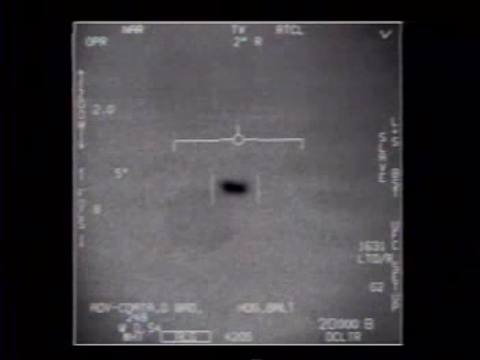
CEFAA's official notice on the case: the 11 November 2014 sighting, the absence of radar contact and radio reply, the rejection of the airliner-and-water hypothesis on meteorological grounds, and the committee's classification as FANI.
“luego de un extenso estudio del caso, coincidieron en catalogarlo como FANI (Fenómeno Aéreo No Identificado)” source
Internet Archive copy of 19 February 2017. The original domain cefaa.gob.cl no longer responds; the body is now SEFAA at sefaa.dgac.gob.cl.
OFFICIALSEFAA (Sección de Estudios de Fenómenos Aéreos Anómalos), DGAC Chile · DATE TO VERIFY
The agency's own history: CEFAA founded on 3 October 1997, led by Gen. Ricardo Bermúdez until 2016, and renamed SEFAA on 18 October 2021 under the DGAC's communications sub-department.
CLASSIFIEDDeclassifiedFILE NO. 010SHEET 2 OF 3
Press
Newspaper and magazine coverage, then and now. Linked, never copied.
PRESSLeslie Kean, Huffington Post (contributor platform) · 2017-01-05
The article that released the video. Gives the crew's account, the radar and radio checks, CEFAA's two years of meetings, and its conclusion that most committee members agreed to call the object a UAP.
“We do not know what it was, but we do know what it was not.” source
Quote from Gen. Ricardo Bermúdez, CEFAA director during the investigation. Published on HuffPost's self-publishing contributor platform. The original _us_ link redirects to this address.
PRESSLeslie Kean, Huffington Post (contributor platform) · 2017-01-17
Kean's follow-up. Reports radar analysis by Robert Powell and Rob Jeffs that brings IB6830 into the frame once a 7-degree camera-heading error is assumed, lists remaining objections, and quotes CEFAA's interim director.
“It is now becoming clear that this possibility is a legitimate one, and needs to be explored further.” source
CLASSIFIEDDeclassifiedFILE NO. 010SHEET 3 OF 3
Analysis
Our own reading of the file, written from the sources on the other sheets. Opinion is marked as such.
The video is real, official and unusually well documented: it carries its own timestamps and the helicopter's GPS position. That is what made the case solvable. With public ADS-B flight tracks, anyone could ask which aircraft sat on the camera's line of sight at each second. The answer was Iberia IB6830, an Airbus A340 that had just turned north out of Santiago and was climbing. Its two pairs of engines would show as two hot blobs; the ‘discharges’ fit short aerodynamic contrails.
CEFAA's case against an airliner rested on what was not seen: no traffic on radar near the helicopter, no answer on the radio, no aircraft cleared to land, and weather it judged wrong for a trail. Each holds only if the object was as close as the crew estimated. The airliner explanation needs one assumption: the crew underestimated the distance. CEFAA's own French analysts had already proposed an airliner in 2015, though they got the engine count and direction of flight wrong.
We label this Explained because a known cause was identified by a clearly credible, checkable reconstruction, not because CEFAA said so. The official file still reads ‘unidentified’, and we have found no revised CEFAA or SEFAA statement. If one appears, it goes in the file.
What it shows
That a Chilean Navy crew filmed an object on infrared they could not identify, and that Chile's official committee filed it as unidentified after two years.
That the video's own time and GPS data, set against public flight tracks, put Iberia IB6830 on the camera's line of sight, banking when the object banks.
That an official ‘unidentified’ and the best available explanation can part ways: CEFAA's own commissioned analysts had proposed an airliner in 2015.
What it doesn't prove
That CEFAA changed its finding. We found no revised official statement; the 2017 notice still says FANI.
That the crew were careless. The airliner explanation only requires that they underestimated how far away the object was.
That every detail is settled. The match relies on correcting the camera's displayed heading by about 7 degrees, which Kean's sources flagged as an open question.
The other side
CEFAA's committee of scientists, military officers and aviation staff studied the case for two years and rejected an airliner. Radar saw nothing near the helicopter, the object did not answer the radio, no aircraft was authorised in the airspace where the crew placed it, and the crew reported 30 nautical miles of visibility while IB6830 was farther away for much of the video. The helicopter's own radar never picked it up, and the match only works if the camera's heading was off by about 7 degrees. The identification comes from private analysts, not from any official body.
Has CEFAA, now SEFAA, ever formally reviewed the IB6830 identification? No public revision was found.
Why did the camera's displayed heading differ by about 7 degrees from the bearing worked out from the coastline?
Did the Navy's or DGAC's radar recordings show IB6830 where the reconstruction places it? The radar images shared with Kean's contacts suggest so; the full data are not public.
Other analyses
COMMENTARYAntoine Cousyn, François Louange and Geoff Quick (IPACO) · 2015-11-26
Image analysis prepared at CEFAA's request. Concludes the object was most probably an airliner and the trails a contrail or dumped waste water. Updated on 9 January 2017 after the real camera model became known.
“The object observed in the video was most probably a medium-haul twin jet airliner in a landing phase” source
Private analysts, not an official finding. The later reconstruction found a four-engined aircraft climbing, not a twin-jet landing.
COMMENTARYMick West and contributors, Metabunk · 2017-01-06
The working thread. Uses the video's timestamps and GPS, the IB6830 flight track and Google Earth views of the coastline to show the aircraft in the camera's line of sight, with its banking and engine layout matching the image.
A public forum thread; the opening post by the site's administrator was updated as the analysis developed. Cited for its data, which readers can check.
West's published account of how the case was solved in five days, why IPACO's report was rejected by CEFAA, and why eliminating explanations one by one led the committee astray.
“By January 11, after some detailed frame-by frame analysis of the movement of the object, we were able to conclude with a very high degree of confidence that the object was flight IB6830, departing from Santiago airport and leaving two segments of aerodynamic contrails as it climbed.” source
TO VERIFY Candidates, not yet checked
A YouTube or official copy of the full nine-minute video: Kean's article embeds it, but no video ID or official channel was verified, so no embed.
Any later CEFAA or SEFAA statement accepting or rejecting the IB6830 identification; none found on sefaa.dgac.gob.cl (site search for ‘armada’ returned nothing).
The original CEFAA English-language site (en.cefaa.gob.cl) and its case list; domain no longer responds.
Newsweek's January 2017 report (‘Chilean Navy Can't Identify Mysterious Aircraft Caught on Video’) loaded but was not read in full.
A claim seen in a search snippet (theufodatabase.com, not opened) that newly released Chilean Navy documents refute the airliner explanation: not found in any primary source.
Found, but not linked to a source we trust. Not on the sheets until they are.